
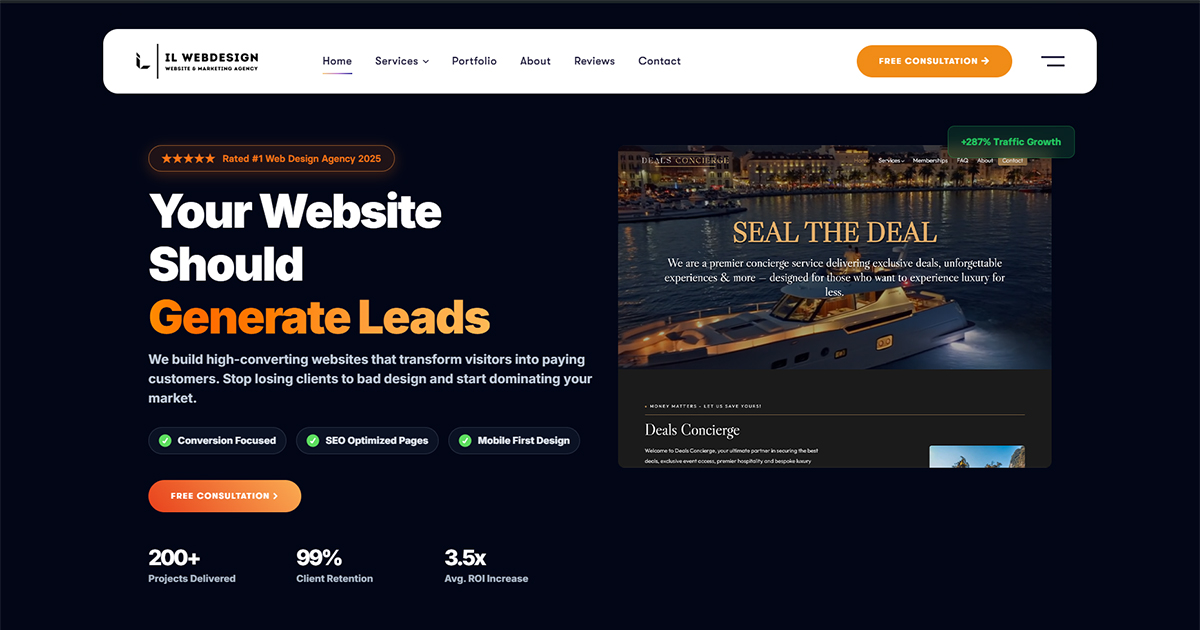
For NYC small businesses competing in one of the world’s most crowded digital marketplaces, every pixel of your website counts — but none more than what appears before a visitor ever scrolls. This prime real estate is known as “above the fold,” and it can make or break your first impression. In Manhattan, Brooklyn, and Queens, where potential customers are comparing dozens of businesses in seconds, the content you place above the fold directly determines whether visitors stay to learn more or bounce to a competitor. Understanding what above the fold means, why it matters, and how to optimize it is one of the most impactful investments you can make in your web presence. In this guide, we’ll break down everything NYC small business owners need to know about above the fold design.
What Does “Above the Fold” Mean in Web Design?
The term “above the fold” originates from print newspapers, where editors placed the most important headlines on the upper half of the front page — the half visible to passersby before unfolding the paper. In web design, above the fold refers to the portion of a webpage that is visible to a visitor without scrolling when they first land on it.
Because screen sizes vary dramatically — from large desktop monitors to small smartphone screens — the exact boundary of “above the fold” shifts depending on the device. On a typical desktop screen (1366×768 pixels), above the fold includes roughly the top 600–700 pixels. On a mobile device, that window may shrink to just 400–500 pixels. This variability makes it critical that your above-the-fold design performs well across all screen sizes, using responsive design principles to ensure the experience is optimized everywhere.
The Fold in a Mobile-First World
With Google’s mobile-first indexing now the standard, your above-the-fold content must be optimized for smartphones above all else. Studies from the Nielsen Norman Group consistently show that users spend the vast majority of their time looking at content above the fold, with attention dropping sharply below it. For NYC businesses targeting busy, on-the-go customers browsing on their phones, the fold has never been more important. The content that loads first, displays clearly, and communicates value instantly is what determines whether a potential customer engages or exits.
Why Above the Fold Content Matters for User Engagement
Your above-the-fold section is essentially your digital storefront window. Just as a physical storefront in SoHo or Midtown Manhattan needs to attract passersby with compelling window displays, your website’s above-the-fold content must immediately communicate who you are, what you offer, and why a visitor should care. The stakes are high — and in a market as competitive as New York City, there’s no room for a weak first impression.
Research from the Nielsen Norman Group shows that users form a first impression of a website in approximately 50 milliseconds. That initial judgment — largely subconscious — determines whether they’ll engage further. If your above-the-fold section is cluttered, confusing, or fails to communicate value, visitors will leave before they ever see your services, testimonials, or contact information.
Impact on Bounce Rates and Conversions
A poorly designed above-the-fold section leads to high bounce rates, which negatively impacts both your Google rankings and your bottom line. Conversely, a strong above-the-fold experience that clearly communicates your value proposition and guides users toward a next step — whether that’s calling your business, booking a consultation, or reading more — can dramatically improve conversion rates. For a Manhattan restaurant, law firm, or retail shop, that difference can translate directly into revenue and long-term customer relationships.
SEO Implications
Search engines like Google use engagement signals — including time on site, bounce rate, and pages per session — as indirect ranking factors. When your above-the-fold content hooks visitors and encourages them to explore further, it sends positive signals to Google. According to Google Search Central, creating helpful, people-first content that satisfies user intent is foundational to strong search performance. A compelling above-the-fold section is where that user intent satisfaction begins.
Key Elements Every NYC Business Should Include Above the Fold
Not all above-the-fold sections are created equal. The most effective ones include a carefully chosen set of elements that immediately orient visitors and motivate action. Here’s what your NYC business website should prioritize in its above-the-fold layout:
A Clear, Benefit-Driven Headline
Your headline is the first thing visitors read. It should immediately communicate the core benefit your business provides — not just what you do, but how you help. Instead of “Manhattan Web Design Agency,” try “We Build Websites That Win More Customers for NYC Businesses.” This customer-focused framing speaks directly to what visitors care about most and immediately answers the question: “What’s in it for me?”
A Supporting Subheadline
Your subheadline should add context and specificity to the main headline. It’s your chance to mention your location, specialization, or key differentiator. For example: “Custom, mobile-optimized websites for restaurants, law firms, and retail shops in Manhattan, Brooklyn, and Queens — designed to convert visitors into paying customers.” A strong subheadline reinforces the headline’s promise and gives visitors more reason to stay.
A Strong Call to Action (CTA)
Every above-the-fold section needs at least one clear, prominent CTA button. Research from web.dev reinforces that user-centric design with fast, clear, actionable interfaces directly improves core web vitals and engagement. Your CTA should be action-oriented (“Get a Free Quote,” “Schedule a Consultation,” “Call Us Today”) and visually distinct from surrounding content through color contrast and size.
A Compelling Hero Image or Visual
A high-quality image or video that reflects your brand, services, or team helps build trust and make your site feel professional. For NYC businesses, authentic local imagery — your actual storefront, your team at work, or recognizable NYC landmarks — can create an immediate connection with local visitors. Avoid generic stock photos that feel impersonal and fail to differentiate your brand.
Social Proof Indicators
If space allows, subtle trust signals above the fold — such as star ratings, a line like “Trusted by 200+ NYC businesses,” or recognizable client logos — can significantly boost credibility before a visitor even begins to scroll. In competitive NYC markets, trust signals can be the deciding factor between a visitor who converts and one who bounces to a competitor.
How to Design an Effective Above the Fold Section
Knowing what to include is only half the battle. How you design and arrange these elements is equally critical to above-the-fold effectiveness. Here are the core design principles that separate high-performing above-the-fold sections from mediocre ones:
Prioritize Visual Hierarchy
Visual hierarchy guides the visitor’s eye through your content in the order you intend. Your headline should be the largest text element; your CTA button should be visually prominent through color contrast; your hero image should support rather than compete with your text. The Nielsen Norman Group’s guidance on visual hierarchy emphasizes that users scan in predictable patterns — your layout should accommodate and leverage these natural reading patterns to direct attention where it matters most.
Optimize Loading Speed
Nothing destroys an above-the-fold experience faster than slow loading. If your hero image takes more than two seconds to appear, a significant percentage of visitors — especially those on mobile data connections in the NYC subway — will abandon the page. Google’s Largest Contentful Paint (LCP) metric specifically measures the time it takes for your main above-the-fold content to load and is a core ranking factor. Aim for LCP under 2.5 seconds by compressing images, using modern formats like WebP, and leveraging a content delivery network (CDN).
Keep It Uncluttered
One of the most common mistakes in above-the-fold design is trying to include too much information. Resist the temptation to cram in every service, award, and feature. Above the fold should answer one question clearly: “Why should I stay on this page?” Everything else can live below the fold where engaged visitors will naturally scroll to find it. White space is your friend — it creates breathing room that makes your headline and CTA stand out.
Ensure Mobile Responsiveness
Test your above-the-fold section on multiple screen sizes. Your headline may display beautifully on a desktop but get cut off or overflow on a smartphone. Use responsive design techniques — flexible grid layouts, scalable images, and viewport-relative font sizes — to ensure a consistently strong experience across devices. The W3C’s CSS Flexbox specification provides the technical foundation for creating flexible, responsive layouts that adapt gracefully to any screen size and device orientation.
Common Above the Fold Mistakes NYC Small Businesses Make
Even well-intentioned website owners often make avoidable mistakes that undermine their above-the-fold effectiveness. Being aware of these pitfalls can save you significant lost business. Here are the most common issues to avoid:
Vague or Generic Headlines
Headlines like “Welcome to Our Website” or “Your Trusted Partner” communicate nothing specific and fail to differentiate your business. NYC consumers are sophisticated and time-pressed — be specific about what you offer and who you serve. Specificity breeds credibility and immediately signals to visitors that your business understands their needs.
Weak or Missing CTAs
Some business websites have no CTA above the fold at all, forcing visitors to scroll before they can take any action. Others have CTAs that are too subtle — small text links buried in navigation menus. Your CTA should be impossible to miss: a high-contrast button with action-oriented text, placed prominently where the eye naturally falls after reading the headline.
Auto-Playing Videos or Carousels
Auto-playing videos consume bandwidth, slow page load times, and can be disorienting. Hero carousels — rotating banner slides — have been shown by multiple UX studies to reduce engagement rather than improve it. A single, strong static image paired with a clear headline almost always outperforms a carousel. When in doubt, simplicity wins.
Ignoring Local Context
For NYC businesses, failing to establish local relevance above the fold is a missed opportunity. If you serve Manhattan, Brooklyn, or Queens specifically, say so above the fold. Local specificity builds immediate trust with local visitors and improves relevance for local search queries targeting your specific neighborhoods and borough.
Key Takeaways: Above the Fold Best Practices for NYC Businesses
- Define your value clearly: Your headline and subheadline should tell visitors exactly what you offer and why it matters to them — within the first 5 seconds of landing on your site.
- One primary CTA above the fold: Guide visitors toward a single, clear next step. Multiple competing CTAs cause decision paralysis and reduce overall conversion rates.
- Speed is non-negotiable: Aim for an LCP under 2.5 seconds. Slow-loading above-the-fold content drives visitors away before they even see your message.
- Design for mobile first: More than half of NYC web traffic comes from mobile devices. Your above-the-fold section must look and perform perfectly on smartphones of all sizes.
- Test and iterate: Use A/B testing tools to compare different headlines, CTAs, and images. Small changes above the fold can produce significant improvements in conversion rates over time.
- Add trust signals: Star ratings, client counts, or recognizable logos above the fold help new visitors trust your business before they scroll further into the page.
Ready to Strengthen Your NYC Business Website?
Your above-the-fold section is the single most important real estate on your website — and for NYC small businesses competing for attention in one of the most competitive markets in the world, getting it right is essential. At IL WebDesign, we specialize in building high-performance, conversion-focused websites for businesses across Manhattan, Brooklyn, and Queens. From crafting compelling headlines to optimizing page speed and mobile responsiveness, we handle every detail that makes the difference between a website that converts and one that doesn’t.
Ready to transform your above-the-fold experience and turn more visitors into customers? Contact IL WebDesign today for a free consultation and let’s build a website that works as hard as your NYC business demands.
References
- Nielsen Norman Group – Scrolling and Attention on the Web
- Nielsen Norman Group – First Impressions: How Visitors Judge Your Site in Milliseconds
- Google Search Central – Creating Helpful, Reliable, People-First Content
- web.dev – Largest Contentful Paint (LCP)
- Nielsen Norman Group – Visual Hierarchy in UX Design
- W3C – CSS Flexible Box Layout Module